
The 3 Golden Pillars & Guiding Tenets
Compassion for Creation & Healing
Established botanical gardens, zoological sanctuaries, and free Ayurvedic dispensaries saving countless lives.
Prepared Peace (2,200 Cavalry)
Maintained 2,200 armed Saint-Soldiers for righteous defense without ever initiating offensive warfare.
Unalterable Sanctity of Gurbani
Excommunicated Ram Rai for altering a single word of Bani, enshrining the eternal purity of Sri Guru Granth Sahib.
Complete Historical Chronicle
1. Sacred Birth & Early Life
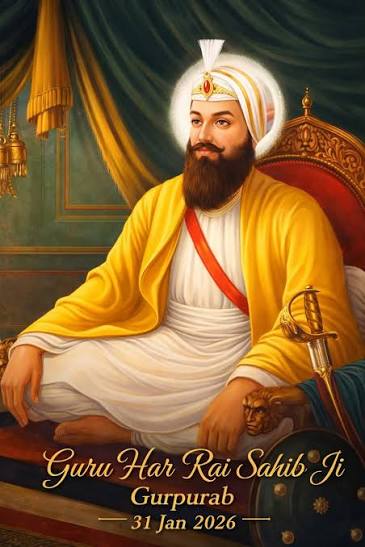
Sri Guru Har Rai Ji, the seventh Sikh Guru (Nanak VII), was born on Sunday, 31 January 1630 at Kiratpur Sahib to Baba Gurditta Ji (eldest son of Guru Hargobind Sahib) and Mata Nihal Kaur Ji (also known as Mata Ananti Ji). He succeeded his grandfather, Sri Guru Hargobind Sahib Ji, as Guru on Tuesday, 19 March 1644 at the age of fourteen. Guru Ji married Mata Kishan Kaur Ji (also known as Mata Sulakhni Ji), daughter of Sri Daya Ram Ji of Anoopshahr (Bulandshahr, UP), and was blessed with two sons: Baba Ram Rai Ji and Sri Guru Har Krishan Ji (the Eighth Guru).
2. Spiritual Inquiries & Rejecting Dogma
From early childhood, Guru Har Rai Ji displayed boundless compassion for all living beings and nature. A famous sakhi relates that as a young boy walking through a garden, his flowing robe accidentally brushed and snapped some delicate blossoms. Deeply distressed by the suffering caused to the plants, the young Guru began to weep. His grandfather Guru Hargobind Ji gently counseled him: "One who wears a flowing robe must walk with vigilance, keeping it drawn close." Throughout his life, Guru Ji taught reverence for every element of God's creation, declaring: "The axe cuts the sandal tree, yet the sandal perfumes the axe — so must the holy return good for evil."
3. Householder Life & Divine Awakening
Continuing the martial tradition of his grandfather, Guru Har Rai Ji maintained a standing cavalry of 2,200 disciplined Saint-Soldiers (mounted horsemen) at all times at Kiratpur Sahib. While he kept this armed force strictly prepared for defensive righteousness, he never engaged in aggressive conflict. When attacked without provocation at Marajh by Mohamad Yarbeg Khan (son of Mukhlis Khan) with 1,000 imperial troops, Guru Ji's Saint-Soldiers valiantly repulsed the attack in exemplary self-defense, proving that true peace is defended through strength. Guru Ji established 360 Sikh missionary seats (Manjis) and appointed devout leaders like Suthre Shah, Bhagat Bhagwan, Bhai Sangatia, and Bhai Gonda to spread Sikhi across Malwa, Doaba, Lahore, Sialkot, Pathankot, Jammu, Kashmir, and Kabul.
4. Sacred Journeys & Epochal Missions
A renowned sakhi highlights Guru Ji's deep spiritual bond with his disciple Bhai Gonda, who was sent to preach in Kabul. One afternoon while reciting Japji Sahib in Kabul, Bhai Gonda became so completely absorbed in devotional ecstasy that he mentally clasped Guru Ji's holy lotus feet. At Kiratpur Sahib, Guru Har Rai Ji remained seated completely motionless on his throne for hours, declining his meals until twilight, explaining to the Sangat: "Bhai Gonda is clasping my feet in deep meditation in Kabul — how can I withdraw my feet until he concludes his prayer?" When Sikhs asked whether reciting Gurbani without fully understanding its meaning provides spiritual benefit, Guru Ji pointed to a broken butter pot lying in the sun where the melting butter had soaked deeply into the earthenware. Guru Ji explained: "Just as grease adheres to the shards and perfume lingers on a broken vase, so does Gurbani permeate the heart of a Sikh. Even if not fully understood, daily recitation plants the seed of salvation."
5. Establishing Holy Centers & Guru Ka Langar
Following Emperor Shah Jahan's imprisonment by Aurangzeb, the tyrannical Mughal ruler summoned Guru Har Rai Ji to Delhi to explain Sikh teachings and his past assistance to Dara Shikoh. Guru Ji declined to appear personally before the fanatic emperor, sending his elder son Baba Ram Rai Ji to represent the Guru's court. At the Mughal court, to appease Aurangzeb and avoid royal displeasure regarding a line in Asa Di Var ("Mitti Musalman Ki"), Ram Rai deceitfully substituted the word "Musalman" with "Beiman" (dishonest). When informed of this distortion, Guru Har Rai Ji was deeply grieved and firmly excommunicated Ram Rai from the Sikh Panth, declaring: "Ram Rai has altered the sacred Divine Word to please an earthly king. He shall never see my face again." Guru Ji thus established the eternal principle of the unalterable sanctity and purity of Gurbani.
6. Succession & Merging with the Divine Light
Recognizing the divine spiritual light, purity, and absolute obedience in his younger son, Guru Har Rai Ji called the Sikh congregation on Sunday, 20 October 1661 at Kiratpur Sahib and anointed his five-year-old son, Sri Guru Har Krishan Ji, as the Eighth Nanak. Having completed his earthly mission of supreme compassion, healing, and spiritual guidance, Sri Guru Har Rai Ji merged into the Eternal Divine Light on Sunday, 20 October 1661 at Kiratpur Sahib.
Eternal Legacy & Sacred Historical Shrines
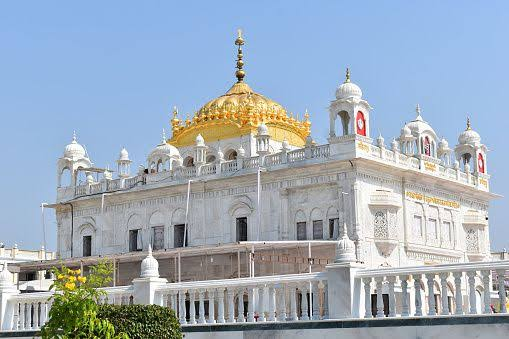
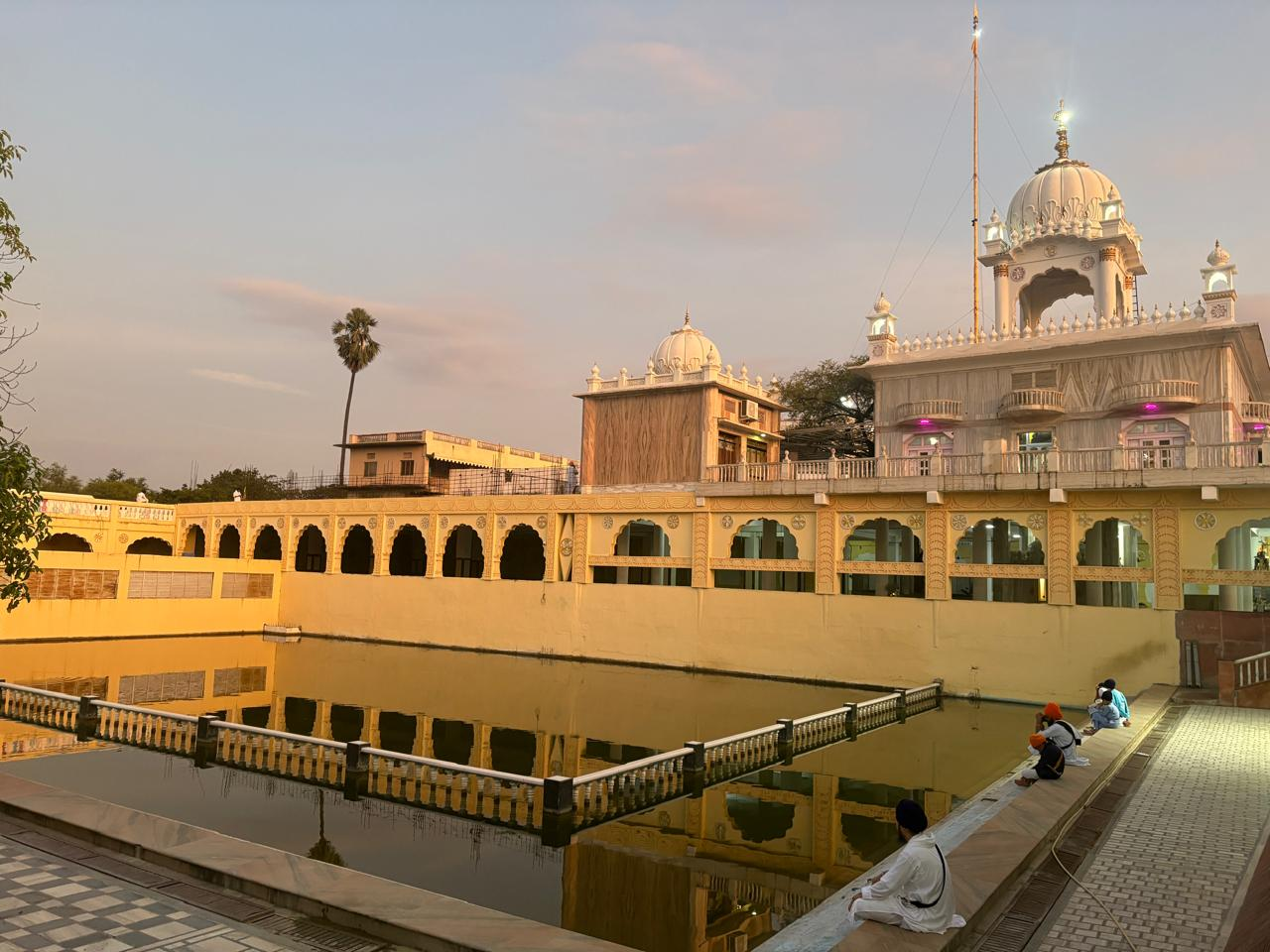
Foundational Contributions of the Seventh Master: 1. Apostle of Mercy & Creation — institutionalized animal sanctuaries, botanic care, and reverence for nature 2. Premier Ayurvedic Dispensary — established free herbal hospital at Kiratpur Sahib, saving prince Dara Shikoh 3. 2,200 Saint-Soldier Cavalry — preserved deterrence and righteous defense while maintaining peace 4. 360 Missionary Manjis — organized extensive missionary outreach from Punjab to Kashmir and Kabul 5. Absolute Sanctity of Gurbani — established that not a single syllable of the Guru's Word may ever be compromised Historic Gurdwaras: Gurdwara Patalpuri Sahib (Kiratpur Sahib), Gurdwara Sheesh Mahal Sahib (Kiratpur Sahib), Gurdwara Damdama Sahib (Kiratpur Sahib).