The 3 Golden Pillars & Guiding Tenets
Gurmukhi, Education & Literacy
Standardized the 35 Gurmukhi letters, established schools for children, and commissioned Guru Nanak's Janamsakhi (~1544).
Guru Ka Langar & Mata Khivi Ji
Nourishing universal community kitchen managed by Mata Khivi Ji, celebrated in Sri Guru Granth Sahib Ji.
Mall Akhara, Seva & Kirat
Instituted wrestling grounds for physical fitness and courage; earned honest living twisting grass strings for cots.
Complete Historical Chronicle
1. Sacred Birth & Early Life
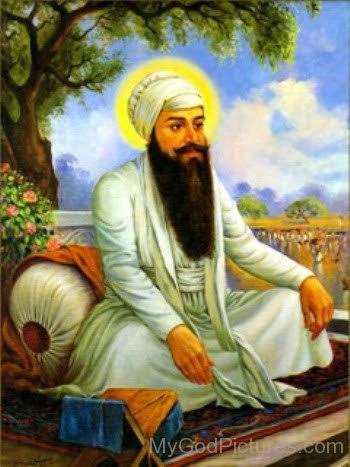
Guru Angad Dev Ji, the second Guru of Sikhism and the second Nanak, was born as Bhai Lehna Ji on 31 March 1504 at Matte Di Sarai (Sarainaga) in present-day Sri Muktsar Sahib region of Punjab. His father was Bhai Pheru Mall Ji (a trader) and his mother was Mata Sabhrai Ji (also known as Mata Ramo, Mansa Devi, and Daya Kaur). Guru Angad Dev Ji married Mata Khivi Ji in 1520, and they were blessed with two sons (Baba Dasu Ji and Baba Dattu Ji) and two daughters (Bibi Amro Ji and Bibi Anokhi Ji). He served as Guru for thirteen years from 1539 to 1552.
2. Spiritual Inquiries & Rejecting Dogma
Before meeting Guru Nanak Dev Ji, Bhai Lehna Ji was a devoted worshipper of Goddess Durga and led annual pilgrimages of devotees toward the Jawalamukhi Temple in the Kangra hills. He lived an active family and working life, deeply religious and continually searching for spiritual truth. After his native region was disrupted by military activity during Babur's invasions, his family relocated to Khadur Sahib near the Beas River, where he continued his life of prayer, reflection, and honest labor.
3. Householder Life & Divine Awakening
The decisive turning point in Bhai Lehna Ji's life came when he heard a hymn of Guru Nanak Dev Ji recited by Bhai Jodha, a devout Sikh of Guru Nanak residing at Khadur. The profound spiritual beauty and truth of Gurbani moved him to the core. He immediately journeyed to Kartarpur to meet Guru Nanak Dev Ji. That first meeting completely transformed his life: he renounced his previous pilgrimage, surrendered his heart and soul to Guru Nanak, and dedicated himself fully to the Sikh mission of truth and universal service.
4. Sacred Journeys & Epochal Missions
Guru Angad Dev Ji assumed the Guruship in 1539 as Nanak II and settled at Khadur Sahib for thirteen years (1539–1552). Recognizing that the young Sikh community required strong institutional pillars to flourish, he focused on education, Gurmukhi literacy, Sangat, Langar, physical fitness, and community organization. People from diverse religious backgrounds, including Yogis and scholars, visited Khadur Sahib to engage in spiritual discourse with Guru Ji, transforming Khadur into a vibrant regional center of Sikhi.
5. Establishing Holy Centers & Guru Ka Langar
One of Guru Angad Dev Ji's greatest historical achievements was the formalization and popularization of the Gurmukhi script. Prior to this, Punjabi was recorded in imperfect scripts like Landa and Mahajani that lacked precise vowel representations. Guru Angad Dev Ji standardized the 35 Gurmukhi characters, enabling Gurbani to be written accurately, read by common people, taught to children, and shielded from distortion. He opened schools where children learned literacy alongside spiritual ethics. Around 1544, he commissioned the authorized Janamsakhi of Guru Nanak Dev Ji. In addition, Guru Ji expanded Guru Ka Langar, where his noble wife Mata Khivi Ji managed the community kitchen, serving rich and poor alike (celebrated in Gurbani). He instituted Mall Akhara (wrestling and fitness grounds) after morning prayers to cultivate physical strength, self-discipline, courage, and camaraderie across castes.
6. Succession & Merging with the Divine Light
Guru Angad Dev Ji lived by the dignity of honest labor (Kirat), earning his livelihood by twisting coarse grass into strings for cots while directing all community offerings to the Langar fund. When the fugitive Mughal Emperor Humayun visited Khadur Sahib after his defeat by Sher Shah Suri, Guru Ji guided him with spiritual wisdom. Following Guru Nanak's precedent, Guru Angad Dev Ji nominated his selfless disciple Guru Amar Das Ji (who had carried water from the Beas for 12 years) as Third Nanak over his own sons. Guru Angad Dev Ji merged into the Divine Light in 1552 at Khadur Sahib.
Eternal Legacy & Sacred Historical Shrines
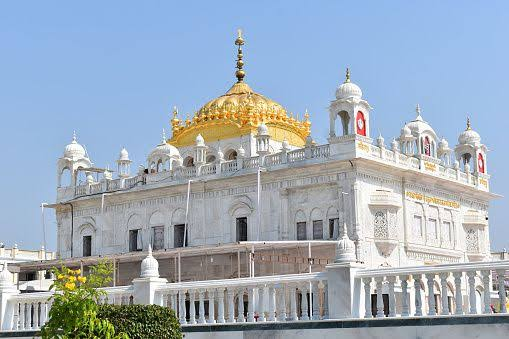
Guru Angad Dev Ji contributed 63 Saloks and Shabads to Sri Guru Granth Sahib Ji, emphasizing Naam, humility, truth, selfless service, physical health, and the eradication of pride. His legacy rests on five great pillars: 1. Gurbani — preserved and organized the sacred written revelations 2. Gurmukhi — empowered ordinary people with literacy in their own mother tongue 3. Langar — institutionalized egalitarian dining with Mata Khivi Ji 4. Education — established community schools for children 5. Seva & Mall Akhara — synthesized spiritual devotion with physical fitness Historical Gurdwaras: Gurdwara Matte Di Sarai (birthplace), Gurdwara Khadur Sahib, Gurdwara Mal Akhara, Gurdwara Tapiana Sahib, Gurdwara Mai Bhrayi, Gurdwara Khandi Sahib.