
The 3 Golden Pillars & Guiding Tenets
Ramdaspur & Sri Amritsar Sahib
Founded the holy city of Amritsar with the sacred Amrit Sarovar — the eternal spiritual and commercial capital of the Sikh Panth.
Anand Karaj & Four Laavan
Composed the Laavan (Suhi Raga) establishing the Sikh marriage rite, defining marriage as "one soul in two bodies."
Masand System & Supreme Humility
Organized global Sikh administration; embodied Nimrata — wiping Sri Chand's feet with his beard.
Complete Historical Chronicle
1. Sacred Birth & Early Life
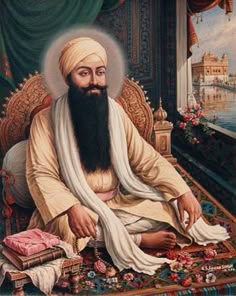
Sri Guru Ram Das Ji, the fourth Sikh Guru (Nanak IV), was born on Friday, 24 September 1534 (SikhiWiki also records 9 October 1534) at Chuna Mandi Bazaar, Lahore, Punjab (present-day Pakistan). His birth name was Jetha, meaning "the firstborn." His parents were Bhai Hari Das Ji and Mata Anup Devi Ji (also known as Mata Daya Kaur). He became Guru at the age of 40 on 16 September 1574 and served for 7 years until 1581, living for 47 years. He married Bibi Bhani Ji (younger daughter of Guru Amar Das Ji) on 18 February 1554 and was blessed with three sons: Baba Prithi Chand Ji, Baba Mahadev Ji, and Sri Guru Arjan Dev Ji (Fifth Guru).
2. Spiritual Inquiries & Rejecting Dogma
Tragedy struck Bhai Jetha Ji early in life when both his parents passed away when he was barely seven years old. Relatives refrained from adopting him. His maternal grandmother found the child in torn clothes with little food and took young Jetha to Basarke near Amritsar. To support himself and his grandmother, Jetha sold boiled black grams (ghungnian/chhole) in the lanes and bazaars. Despite hardship, he was always found in the company of devout and saintly people, his heart naturally inclined toward prayer and spiritual truth.
3. Householder Life & Divine Awakening
One day, Bhai Jetha joined a party of Sikhs travelling to Goindwal to pay homage to Guru Amar Das Ji. Upon arrival, Guru Amar Das Ji at once noticed young Jetha's pleasant manner, humility, and radiant devotion. While fellow travelers returned to Lahore, Jetha decided to stay and become a devoted disciple, working hard in the construction of Baoli Sahib (sacred stepwell), serving in the Langar and the Sangat. When Bibi Bhani Ji reached marriageable age, Mata Mansa Devi Ji remarked she wished for a groom like Jetha Ji. Guru Amar Das Ji replied: "There is no need to search — why not give our daughter to Jetha himself?" The marriage took place on 18 February 1554. After marriage, the couple remained in Goindwal continuing selfless voluntary service (Seva).
4. Sacred Journeys & Epochal Missions
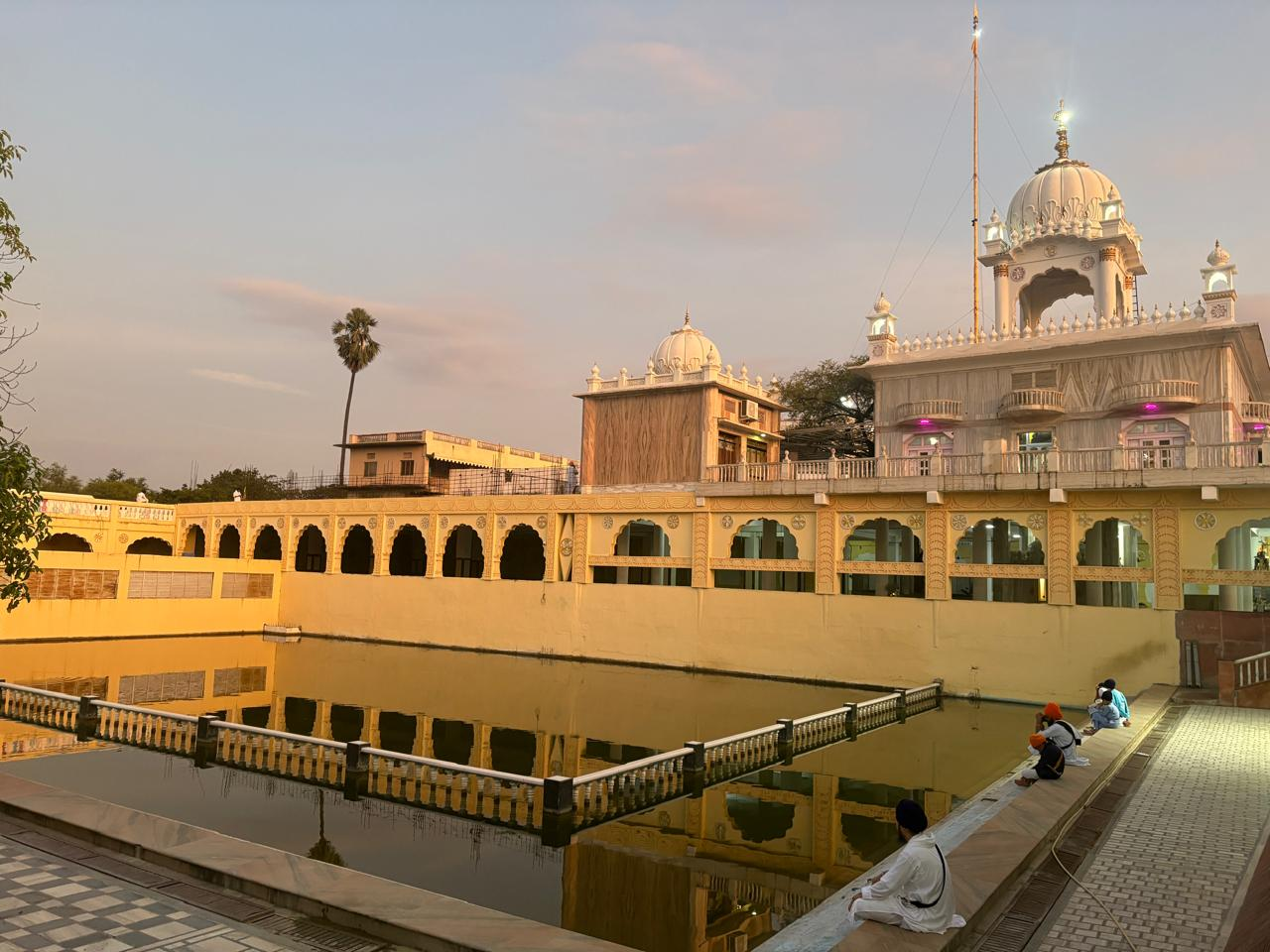
As Guru, Ram Das Ji eagerly continued building the city of Ramdaspur (abode of Ram Das) by excavating the second sacred pool as instructed by Guru Amar Das Ji. Pilgrims came in growing numbers to hear Guru Ji and assist in the excavation. This holy pool came to be known as Amritsar — the Pool of Nectar — and the township developed into the eternal spiritual and political capital of Sikhism: Sri Amritsar Sahib. Guru Ram Das Ji invited and settled traders and craftsmen from fifty-two different professions, turning Ramdaspur into the largest commercial hub in northern India. Guru Ji taught his Sikhs that life is fulfilled not merely by quiet meditation, but by actively participating in the joys and sorrows of others, overcoming Ego and spiritual loneliness.
5. Establishing Holy Centers & Guru Ka Langar
Guru Ram Das Ji established key Sikh institutions: 1. Anand Karaj & Four Laavan: Composed the four-stanza Laavan in Suhi Raga — defining the Sikh marriage covenant as "one soul in two bodies." The four circumambulations around Sri Guru Granth Sahib Ji during the Anand Karaj marriage ceremony remain the universal Sikh marital rite. 2. The Masand System: Instituted the Masand system to organize the Sikh society, spread Gurbani worldwide, and collect Dasvandh (voluntary tithe of 1/10th earnings) for constructing Gurdwaras, Sarovars, and community wells. 3. Sacred Gurbani: Composed 688 hymns in 30 classical Ragas, including essential verses in daily prayers Rehras Sahib and Kirtan Sohila. In SGGS Page 305, Guru Ji instructed: "One who calls himself a Sikh of the True Guru shall get up early morning, meditate on God's Name, bathe daily in the ambrosial pool, and chant Har, Har."
6. Succession & Merging with the Divine Light
A pivotal historic event involved Guru Ji's sons. When Guru Ji sent his youngest son Arjan Dev Ji to Lahore to attend a cousin's wedding and care for the Sangat there, Arjan Dev Ji remained for two years. Homesick for the Guru's Darshan, Arjan Dev Ji wrote two longing devotional letters which his jealous elder brother Prithi Chand intercepted and hid. Arjan Dev Ji then sent a third letter marked with the number "3". Upon reading it, Guru Ram Das Ji investigated, confronted Prithi Chand, and recovered the hidden letters. Deeply moved to tears by Arjan Dev Ji's profound devotion, Guru Ji sent Baba Buddha Ji to bring Arjan Dev Ji back from Lahore with full honours and declared him as Fifth Guru. Another famous incident: When Baba Sri Chand Ji (elder son of Guru Nanak Dev Ji, founder of the Udasi sect) asked Guru Ram Das Ji why he grew such a long beard, Guru Ji humbly replied, "To wipe the dust off the feet of holy men like yourself," and wiped Sri Chand's feet with his beard. Overcome by this humility, Sri Chand embraced Guru Ji and acknowledged his supreme Guruship. Guru Ram Das Ji merged into the Eternal Divine Light on Saturday, 16 September 1581 at Goindwal Sahib.
Eternal Legacy & Sacred Historical Shrines
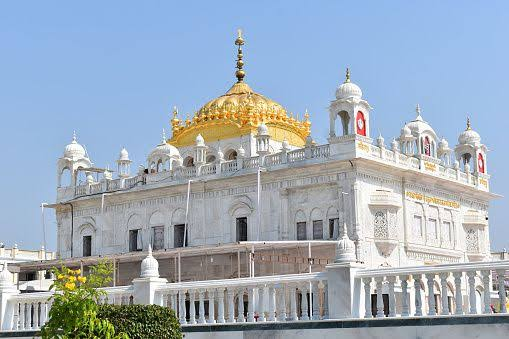
Guru Ram Das Ji contributed 688 divinely-revealed hymns in 30 Ragas to Sri Guru Granth Sahib Ji. Five Foundational Contributions: 1. Sri Amritsar Sahib — founded the spiritual and commercial heart of Sikhi 2. Amrit Sarovar — excavated the sacred Pool of Nectar 3. Anand Karaj & Laavan — established the sacred Sikh marriage code 4. Masand System — organized global Sikh administration and Dasvandh 5. 688 Hymns in 30 Ragas — enshrined sacred Bani, Rehras Sahib, and Kirtan Sohila Historic Shrines: Gurdwara Janam Asthan (Chuna Mandi, Lahore), Gurdwara Guru Ka Mahal (Amritsar), Gurdwara Ramsar Sahib, Sri Harmandir Sahib Complex (Amritsar).