
The 3 Golden Pillars & Guiding Tenets
Miri and Piri
Harmonized saintly meditation with temporal sovereignty and martial defense of the oppressed.
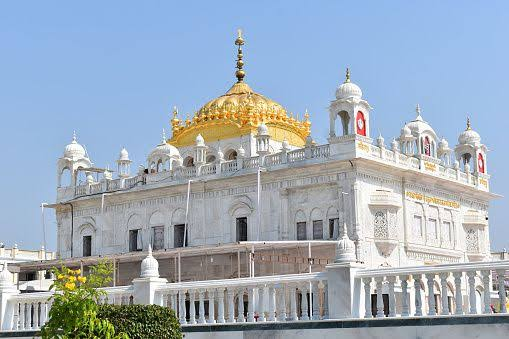
Sri Akal Takht Sahib
Constructed the supreme throne of sovereign temporal and spiritual justice facing Harmandir Sahib.
Bandi Chhor & Defensive Victory
Liberated 52 captive kings from Gwalior Fort and triumphed in 4 defensive battles against tyranny.
Complete Historical Chronicle
1. Sacred Birth & Early Life
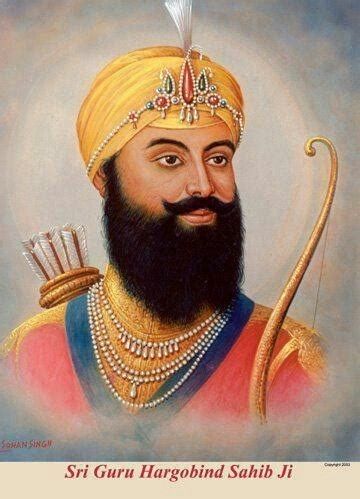
Sri Guru Hargobind Ji, the sixth Sikh Guru (Nanak VI), was born on Monday, 19 June 1595 at Guru Ki Wadali in Amritsar District to the Fifth Guru, Sri Guru Arjan Dev Ji, and Mata Ganga Ji. His birth followed the divine blessing of Baba Buddha Ji, who foretold that Mata Ganga would bear an extraordinarily brave and chivalrous son who would crush oppressors like an onion. Several attempts were made on his life in infancy by his jealous uncle Prithi Chand, including sending a snake-charmer with a poisonous cobra, but the young Guru miraculously overpowered it. He ascended the throne of Nanak on Wednesday, 11 June 1606 at the tender age of 11 following his father's supreme martyrdom.
2. Spiritual Inquiries & Rejecting Dogma
Following the martyrdom of Guru Arjan Dev Ji under Emperor Jahangir's orders, Guru Arjan Dev Ji sent a parting injunction to his 11-year-old son: "Let him sit fully armed on his throne and maintain an army to the best of his capacity." At his accession ceremony on 11 June 1606, Baba Buddha Ji prepared to invest him with the traditional Seli (woolen cord) of Guru Nanak. Guru Hargobind Ji respectfully asked instead to be adorned with a sword. He then donned two swords: one on his right side named "Miri" (signifying Temporal Sovereignty and protection of the oppressed) and one on his left named "Piri" (signifying Spiritual Authority). He declared: "In the Guru's house, spiritual and mundane powers shall be combined. My rosary shall be the sword-belt and on my turban I shall wear a Kalgi." He also invented the classical musical instrument Taus, inspired by the melody of a singing peacock.
3. Householder Life & Divine Awakening
Guru Hargobind Ji was married to Mata Damodari Ji (daughter of Narain Das of Talla), who gave birth to Baba Gurditta Ji, Bibi Viro Ji, and Baba Ani Rai Ji; Mata Nanaki Ji (daughter of Hari Chand of Bakala), mother of the Ninth Guru, Sri Guru Tegh Bahadur Ji; and Mata Mahadevi Ji (daughter of Daya Ram of Jandiyali), who gave birth to Baba Suraj Mal Ji and Baba Atal Rai Ji. Guru Ji built a fortified court at Amritsar known as Lohgarh (Fortress of Steel). He maintained 700 horses, 300 mounted cavalry, 60 gunners, and 500 valiant infantry soldiers from the Majha region. He hoisted the Sikh Nishan Sahib flag and installed a thundering war-drum (Nagara) beaten twice daily. Guru Ji administered justice like a sovereign king, establishing an independent, self-governing people within the Mughal Empire.
4. Sacred Journeys & Epochal Missions
Jealous opponents, including Chandu Shah and Prithi Chand, falsely warned Emperor Jahangir that Guru Ji was amassing an army to avenge his father's death. Jahangir summoned Guru Ji to Delhi, where the Emperor and Empress Nur Jahan were captivated by the Guru's regal grace and holiness. Once, Guru Ji bravely saved Jahangir's life by leaping between the Emperor and an attacking tiger. Later, through Chandu Shah's astrological deceit during Jahangir's illness, Guru Ji was detained in the historic Gwalior Fort. When Jahangir realized the deception and ordered Guru Ji's release, Guru Ji steadfastly refused to leave unless 52 innocent Hindu hill Rajas, imprisoned under harsh conditions in the fort, were freed alongside him. Jahangir conceded that whoever could hold onto the Guru's hem could walk free. Guru Ji had a special royal cloak tailored with 52 long ribbons (tassels), allowing all 52 kings to grasp a ribbon and walk out into freedom. Guru Ji earned the immortal title "Bandi Chhor" (The Great Liberator). His triumphant return to Amritsar coincided with Diwali, where the entire city was illuminated with oil lamps — celebrated worldwide by Sikhs as Bandi Chhor Divas.
5. Establishing Holy Centers & Guru Ka Langar
Guru Hargobind Sahib was the first Guru to engage in armed warfare, successfully commanding the Sikhs through four defensive battles forced upon them by Mughal forces under Jahangir and Shah Jahan: 1. Battle of Amritsar (1628/1634): Triggered when Sikhs captured an imperial royal hunting hawk; Mughal forces under Mukhlis Khan attacked Amritsar during Bibi Viro Ji's wedding. Guru Ji and his Sikhs completely routed the Mughal army, and the wedding was completed with honour. 2. Battle of Sri Hargobindpur (Ruhela, 1630): Defeated Abdullah Khan, the governor of Jalandhar; established the holy township of Sri Hargobindpur. 3. Battle of Gurusar Mehraj (1631): Fought after Bhai Bidhi Chand Chhina heroically retrieved two precious stolen horses (Dilbagh and Gulbagh) from Lahore Fort; defeated the imperial army of Lalla Beg and Qamar Beg. 4. Battle of Kartarpur (1635): Defeated the imperial forces led by the treacherous general Painda Khan and Faujdar of Jalandhar. Painda Khan was killed in single combat by Guru Ji, who mercifully shielded his dying adversary from the burning sun with his own shield. In all four battles, Guru Ji fought purely for defensive freedom and justice, without capturing a single acre of conquered land.
6. Succession & Merging with the Divine Light
Guru Hargobind Ji established the spiritual and fortified township of Kiratpur Sahib in the Shivalik foothills in 1634, making it the central hub for Sikhi. He constructed Gurdwara Kaulsar Sahib in Amritsar in sacred memory of Mata Kaulan Ji (a pious disciple), and established Gurdwara Nanakmatta Sahib during his travels to Uttar Pradesh, Bihar, Bengal, and Kashmir. Guru Hargobind Ji called a grand assembly in 1644 at Kiratpur Sahib and designated his grandson, Sri Guru Har Rai Ji (son of Baba Gurditta Ji), as the Seventh Nanak, passing on the divine light and authority of Guruship. Guru Hargobind Sahib merged into the Eternal Divine Light on Tuesday, 19 March 1644 at Kiratpur Sahib.
Eternal Legacy & Sacred Historical Shrines
Foundational Contributions of the Sixth Master: 1. Miri & Piri Doctrine — seamlessly unified saintly spiritual contemplation with martial bravery and justice 2. Sri Akal Takht Sahib — founded the supreme sovereign throne of the Sikh nation 3. Bandi Chhor — liberated 52 captive kings from Gwalior Fort 4. Four Victorious Defensive Battles — defeated Mughal imperial armies without seizing land or wealth 5. Invention of Taus & Dhadi Vaars — created the Taus string instrument and patronized martial Dhadi singing 6. Kiratpur Sahib & Kaulsar Sahib — built key spiritual centres across Punjab and northern India Historic Gurdwaras: Gurdwara Janam Asthan (Guru Ki Wadali), Sri Akal Takht Sahib (Amritsar), Gurdwara Lohgarh Sahib (Amritsar), Gurdwara Data Bandi Chhor Sahib (Gwalior Fort), Gurdwara Patalpuri Sahib (Kiratpur Sahib).